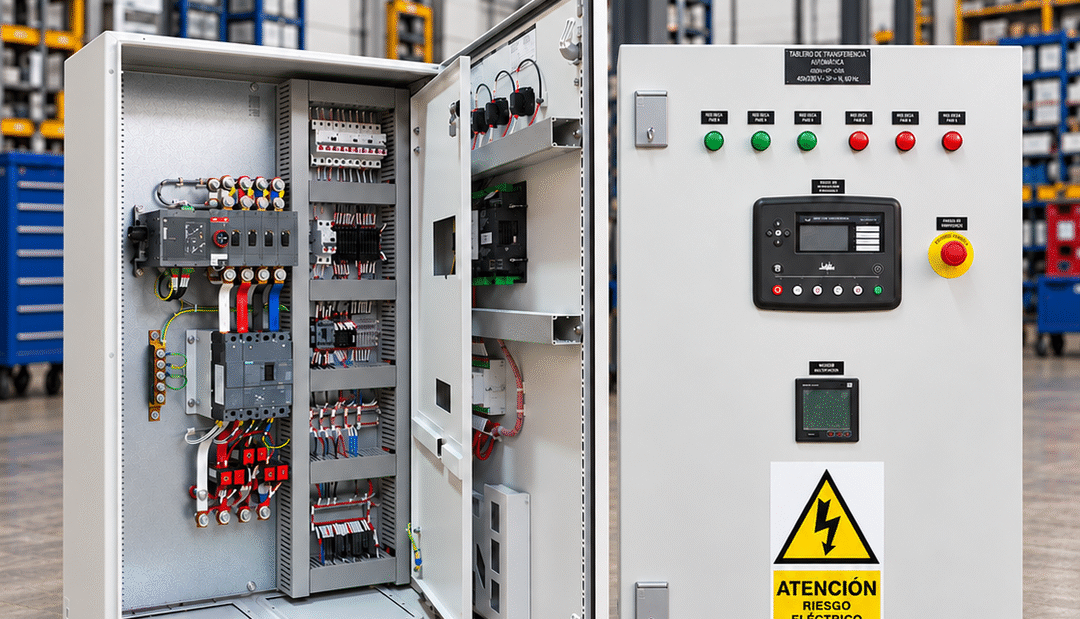
Choose the enclosure based on the level of protection required by the environment (IP or NEMA), the material that can withstand that environment, and the space and climate control needed for the equipment inside.
1. Degree of protection: IP and NEMA
The IP code consists of two digits: the first indicates protection against solids (dust), and the second indicates protection against liquids (water).
- IP54: Protected against limited amounts of dust and splashes. Indoor environments with moderate conditions.
- IP55: dust and water jets. General industrial facilities.
- IP65: completely dust-tight and resistant to water jets. Highly dusty environments or areas where water is used for cleaning.
- IP66: powerful water jets. Outdoor use and washing areas.
The NEMA standard (4, 4X, 12) is the equivalent used in North America. Check the manufacturer’s data sheet for equivalence.
2. Depending on the environment
- Dust (mining, cement, mills): IP55 or IP65, with gaskets in good condition. Be careful with the ventilation filters: they get clogged quickly.
- Water or washing (food, beverages, outdoor use): IP66 and stainless steel.
- Corrosive or coastal environments: stainless steel (304 or 316) or reinforced polyester.
- Outdoors in direct sunlight: solar heat raises the internal temperature. Consider double-walled enclosures, light-colored paint, or a canopy to provide shade.
- Areas with explosive atmospheres: require cabinets and equipment certified for classified areas (ATEX or other applicable standard). A high IP rating alone is not sufficient.
3. Materials
- Painted steel: the most common and economical option. For indoor use and moderate environments.
- Stainless steel: food, chemical, and coastal environments. More expensive, but lasts longer.
- Polyester or polycarbonate: lightweight and corrosion-resistant. For small enclosures or humid environments.
- Aluminum: lightweight and corrosion-resistant, for outdoor use.
4. Size and Distribution
- Add up the space required for all the equipment and leave 20 to 30% free for future expansion.
- Allow for space for cables, cable trays, and access for maintenance.
- Determine the mounting type: wall-mounted, floor-mounted, or freestanding cabinet.
- Provide cable entries with cable glands that meet the appropriate protection rating.
5. Heat and Altitude
If equipment generates heat, a tightly enclosed cabinet without climate control will overheat (see Note 6). At high altitudes, such as in many mining facilities, the air is less dense and provides poorer cooling, so it is advisable to review the thermal design.
Common Mistakes
- Choosing based solely on price and ending up with insufficient IP.
- Buying just enough for today’s equipment and not being able to expand.
- Failing to account for cable entry points, which compromises the seal.
- Installing a painted steel enclosure in a corrosive environment.
Do you need a cabinet for your plant?
We work with Rittal solutions for enclosures, power distribution, and climate control. Tell us about your environment, and we’ll recommend the best option for you.
Contact us at: +51 967 434 361